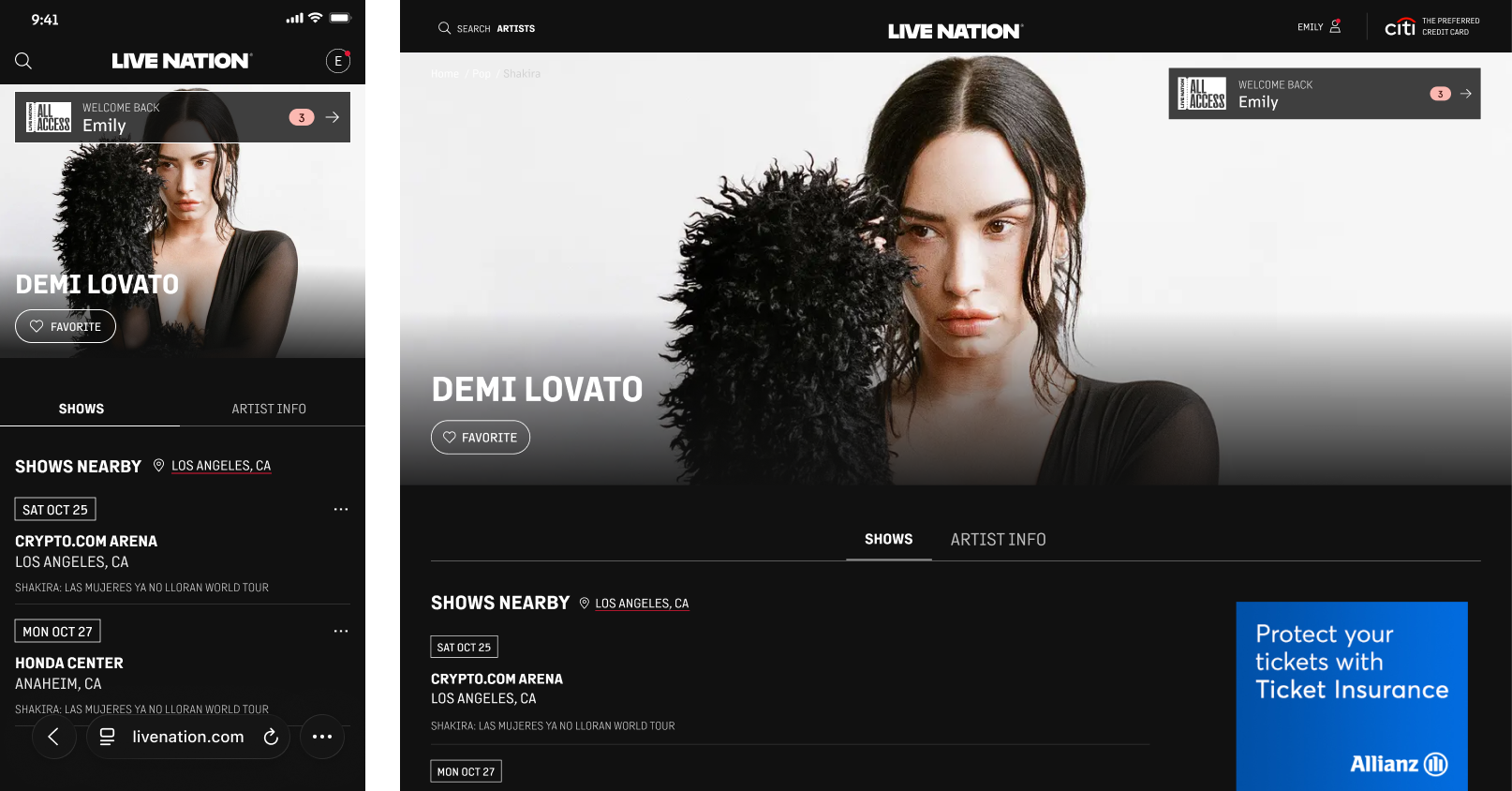
Live Nation Redesign
Reimagining the fan experience across a modern, scalable web platform
Overview
Live Nation’s digital ecosystem serves over 12 million fans discovering concerts, tours, and venues every day. I led the end-to-end redesign of LiveNation.com, transforming fragmented experiences into a cohesive, performant, fan-first platform that improved discovery, engagement, and ticket purchasing outcomes.
Context & Challenge
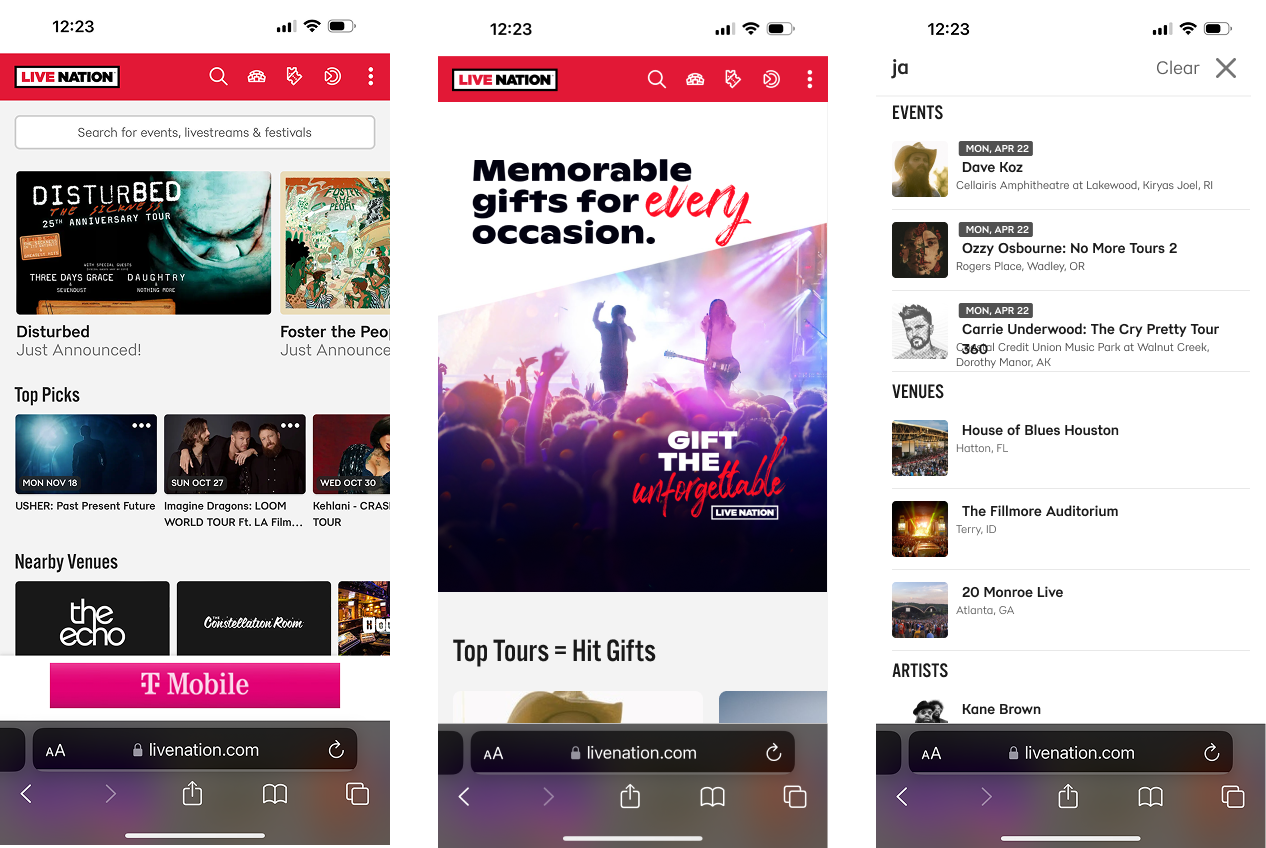
The previous Live Nation experience was inconsistent across venues, visually outdated, and not optimized for mobile browsing—leading to discovery friction and missed conversion opportunities. Fans struggled to locate upcoming shows, navigate venue details, and quickly complete ticketing flows.
Meanwhile, the business needed a scalable digital foundation to support loyalty, personalization, and rapid content growth across hundreds of venues.
My Role
Director of Product Design, responsible for leading the vision, strategy, and execution across the redesign.
I was responsible for:
Setting the design vision and principles
Managing a multidisciplinary design team
Leading cross-functional alignment (Engineering, Product, Marketing, Data)
Developing a scalable design system
Ensuring accessibility, performance, and mobile excellence
Presenting to executive leadership for approvals and roadmap alignment
Approach & Strategy
1. Defined a unified design direction
Developed a modern visual and UX language for LiveNation.com
2. Created a scalable web design system
Reusable components, modular templates, accessibility standards, and responsive behaviors to support rapid development.
3. Prioritized core fan journeys
Mapped discovery → exploration → decision → ticket purchase to identify friction and redesign for clarity and conversion.
4. Incorporated data & experimentation
Partnered with analytics to validate hypotheses, prioritize roadmap items, and guide decision-making around navigation, ticketing, and event content.
User Research & Launch Validation
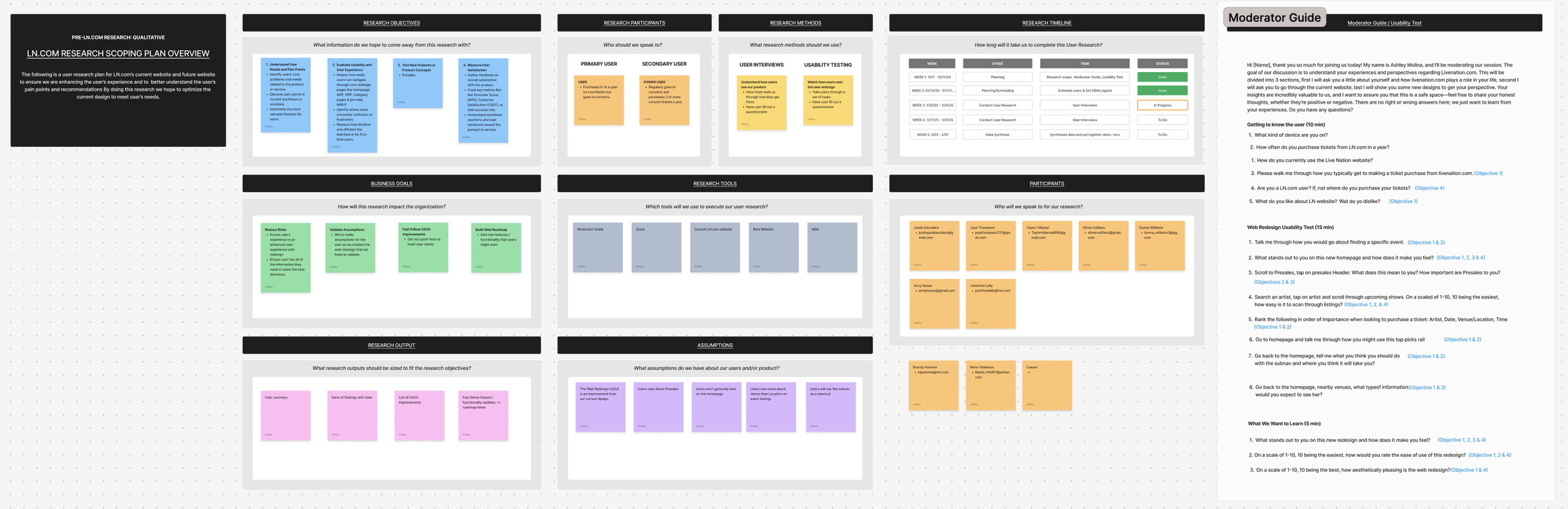
Research Format: User Interviews
Number of Participants: 15
Research Goals
Understand how fans currently discover shows and choose venues
Identify points of confusion or drop-off in the existing experience
Validate early design concepts and information architecture
Test clarity of new navigation and event page hierarchy
Gather expectations for a seamless mobile-first browsing experience
Key Insights
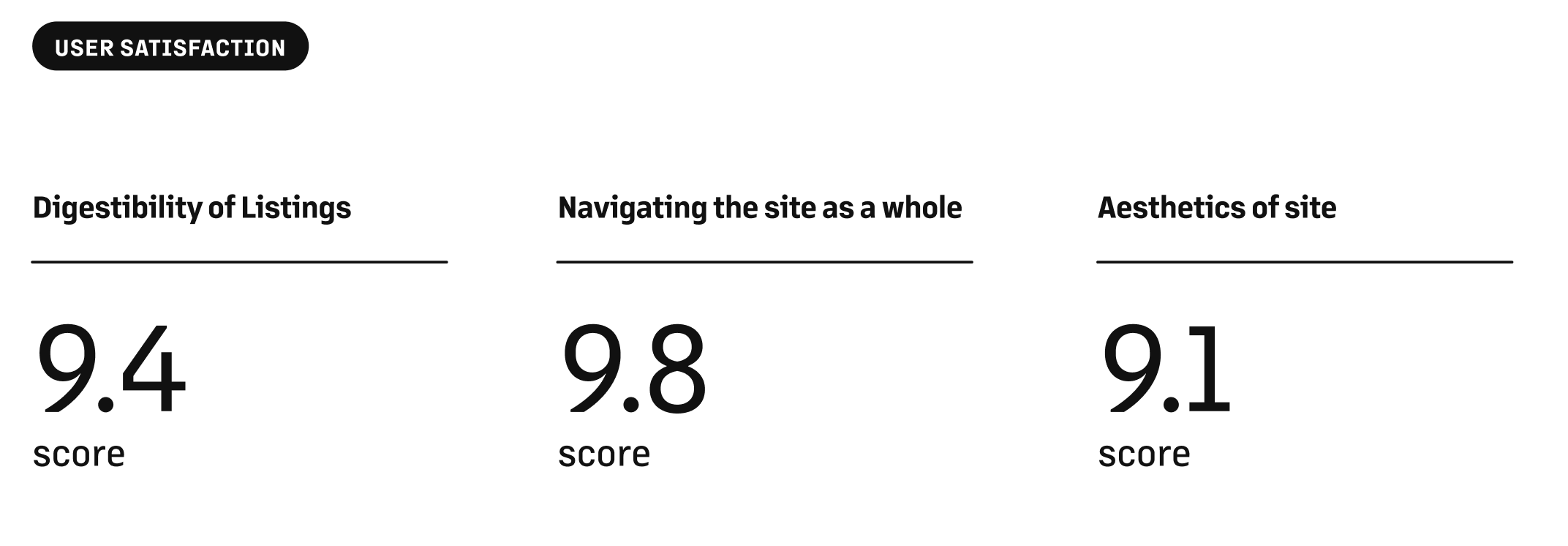
Fans rely heavily on quick scanning → They wanted clearer hierarchy and fewer competing calls to action.
Venue details and policies were often hard to find → Led to anxiety and last-minute support requests.
Mobile browsing was dominant → Navigation required simplification and more predictable patterns.
Fans had strong expectations for personalization → Many expected recommendations tailored to their preferences.
Users preferred shallow, predictable navigation over deep menu structures.
These insights directly informed the navigation model, event content structure, and the templates used across venue sites.
Key Design Decisions
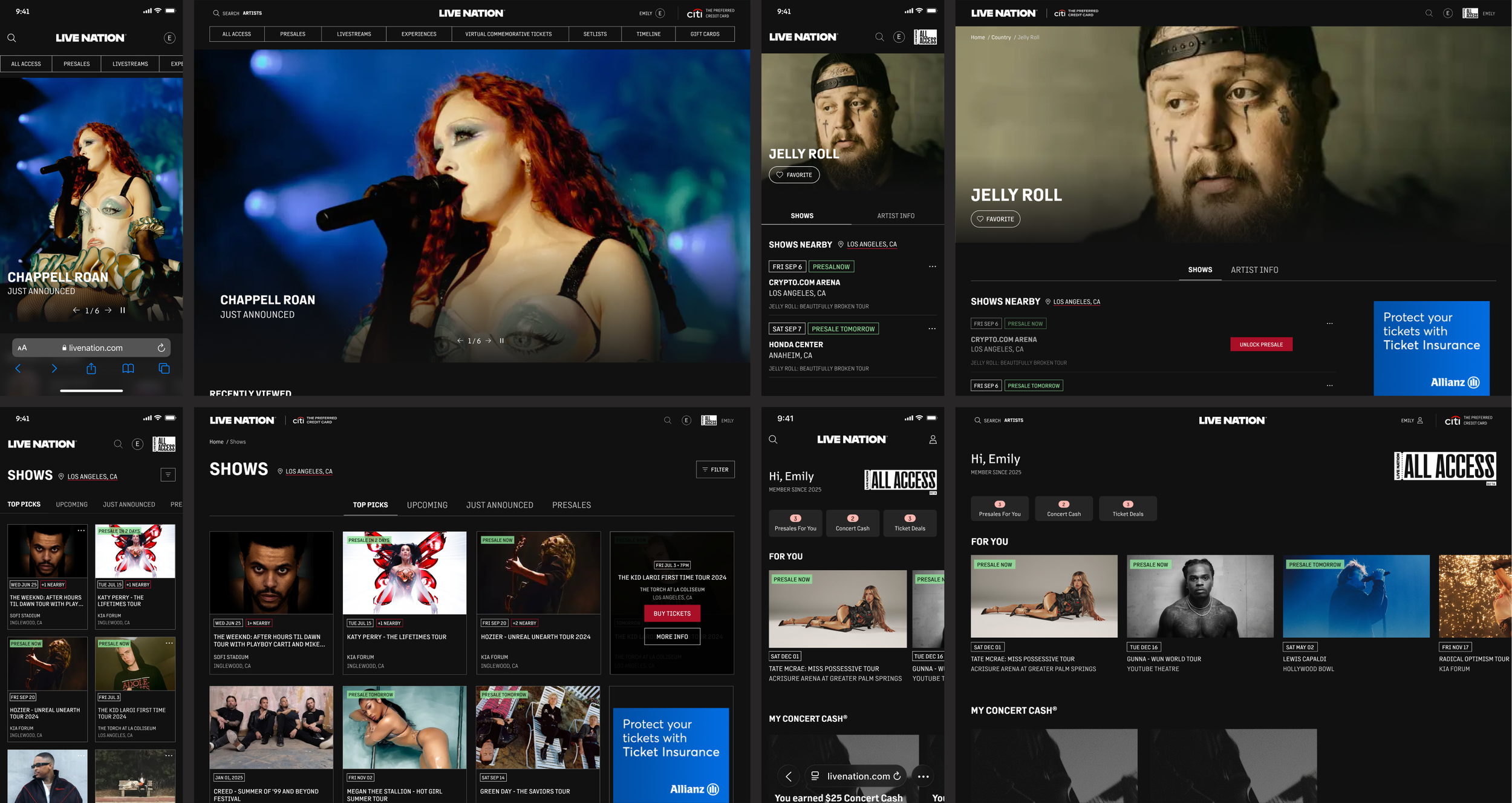
Modernized event and venue pages
Introduced clear hierarchy, simplified browsing, and optimized primary actions to help fans discover events faster.
Mobile-first navigation overhaul
Reduced cognitive load, reorganized categories, improved search discoverability, and streamlined event access.
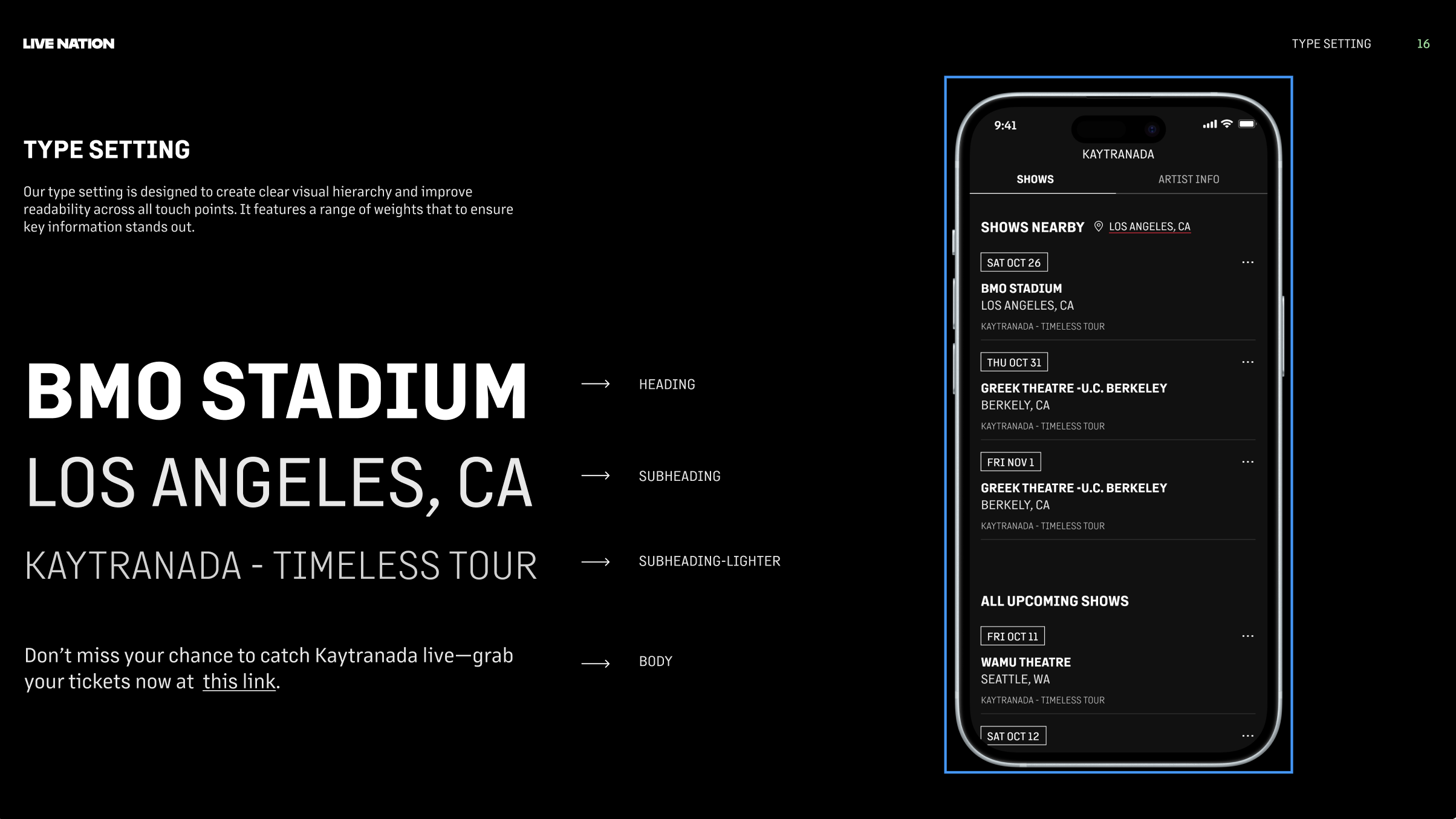
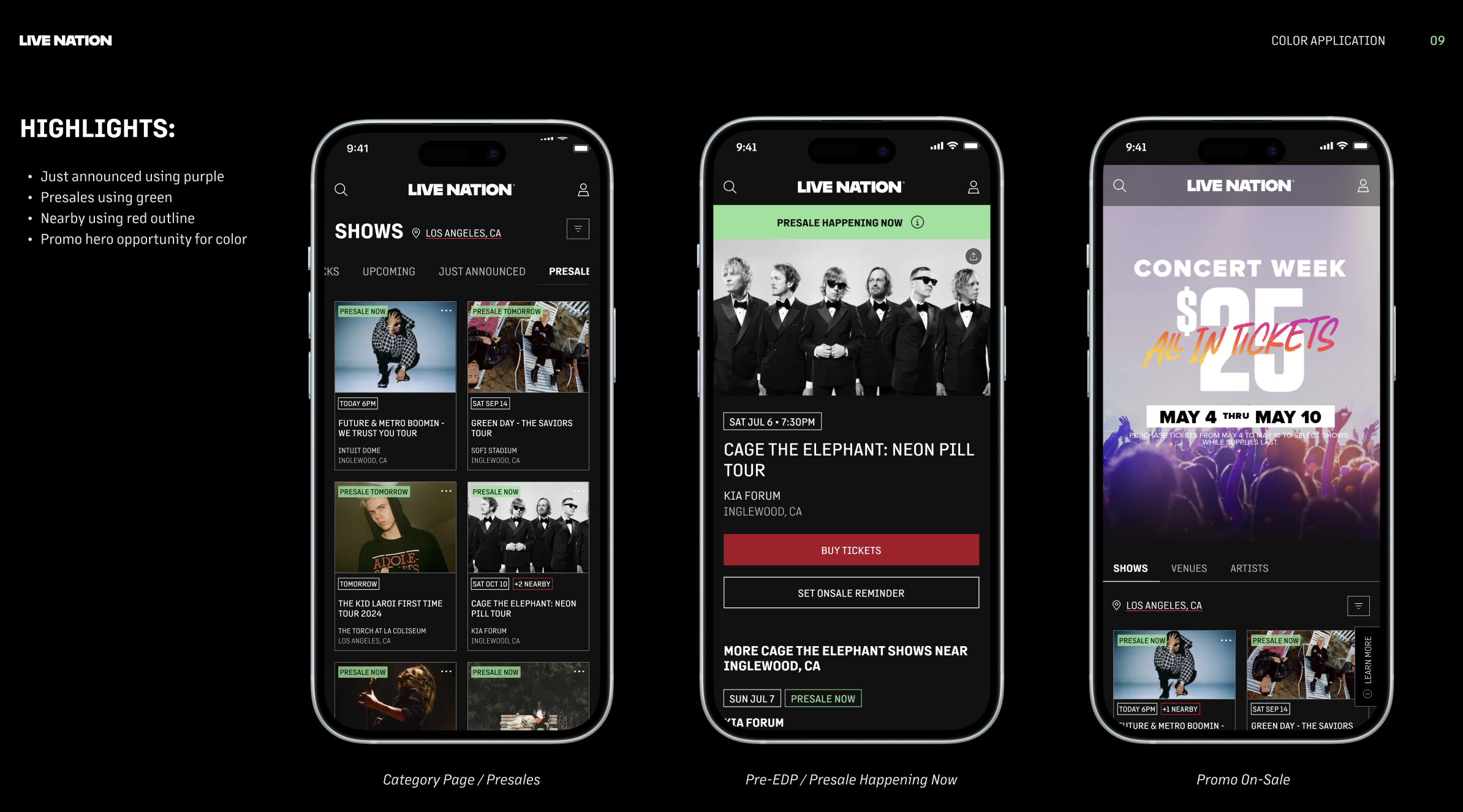
Systemized visual language
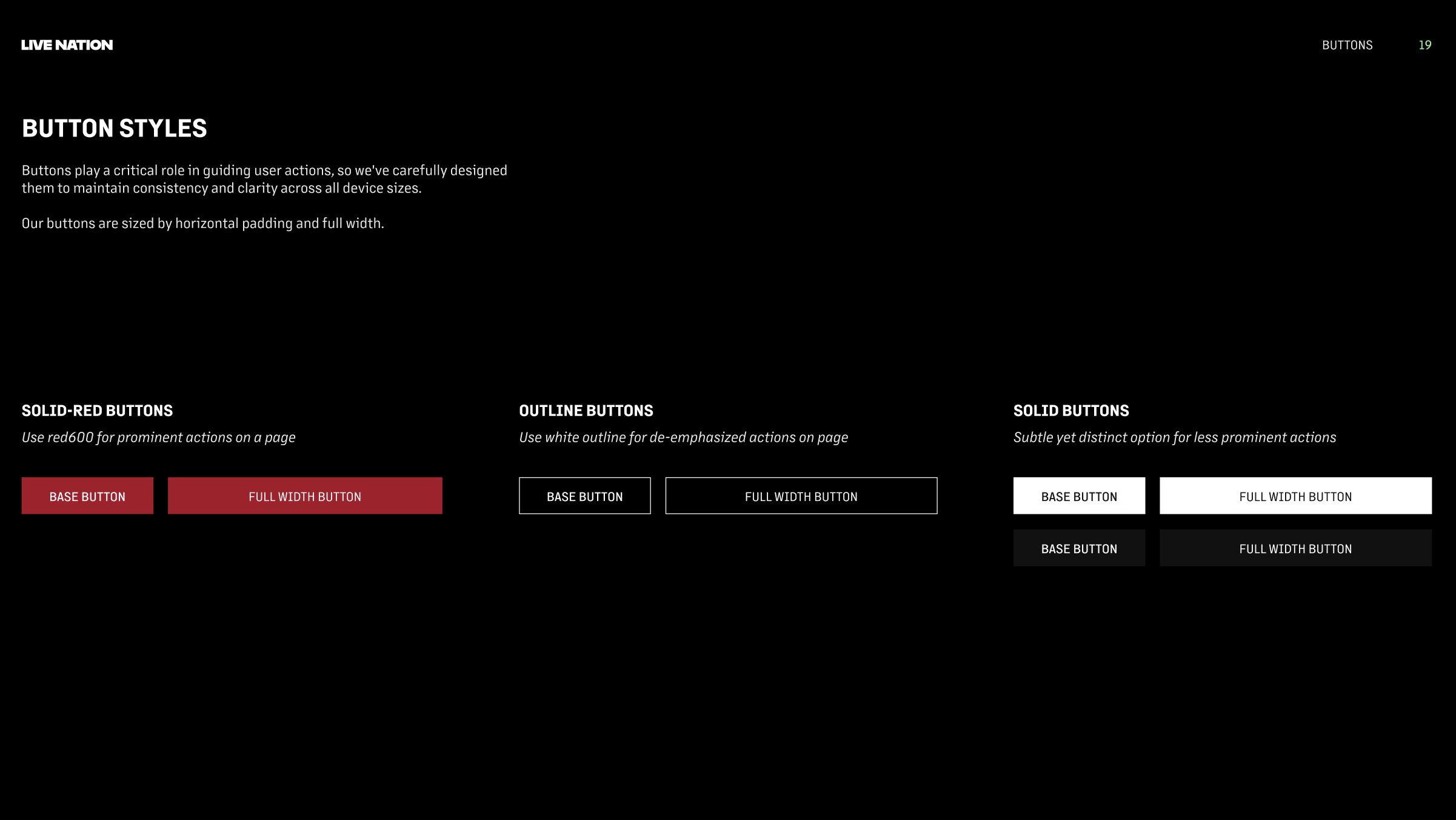
Enabled venue individuality through flexible branding while maintaining shared UX patterns for consistency and performance.
Accessibility & performance improvements
Enhanced readability, keyboard navigation, contrast, and load speeds to build trust and reduce drop-offs.
Cross Functional Collaboration
Partnered closely with engineering to validate feasibility, marketing for brand alignment, PMs for sequencing, and data scientists for KPI tracking. Established recurring executive reviews to maintain alignment across multiple business units.
Outcome & Impact
+17% increase in ticket sales
Driven by improved navigation, clearer CTAs, and mobile optimizations.
$5.5M+ incremental revenue
Attributed to higher venue-site conversion and streamlined discovery flows.
Faster development velocity
The design system reduced design/engineering lift for new pages, components, and venue migrations.
Learnings
System-wide redesign requires balancing consistency with brand flexibility.
Mobile-first decisions produced the largest conversion gains.
Executive storytelling was critical for alignment across 10+ stakeholder groups.
The more modular the system, the easier future features shipped.
Next Steps & Evolution
Improve personalization modules
Expand search and filtering features
Add Loyalty to the site
Continue accessibility and performance optimizations
Evolve the design system to support new product lines